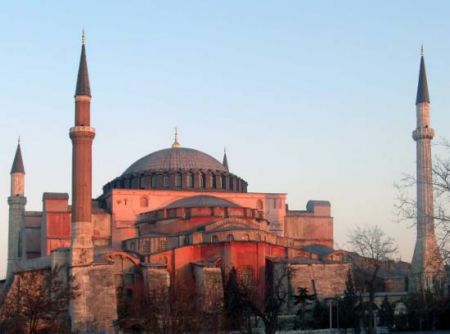
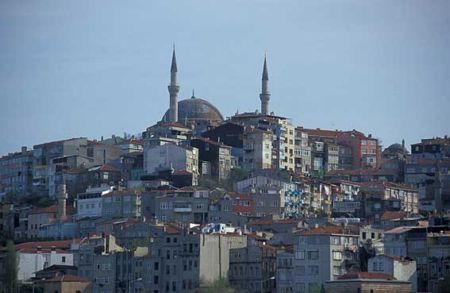
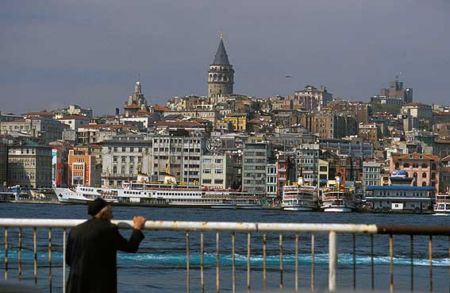
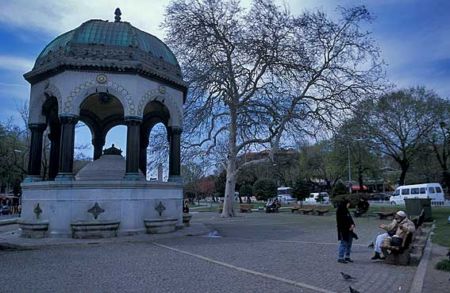
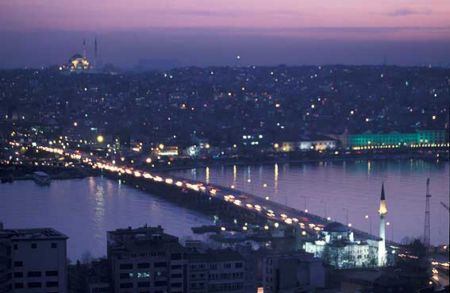
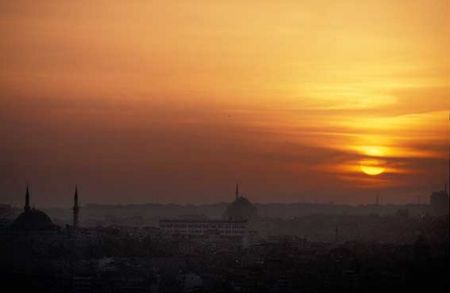
Istanbul
Les informations qui peuvent être utiles pour votre voyage.
Photos de Istanbul
Photos de Istanbul au Panoramio
|
Voyage conseils et avertissements Istanbul
| |||||||||||||||||||||||||||||||||||||||||||||||||||||||||||||||||||||||||||

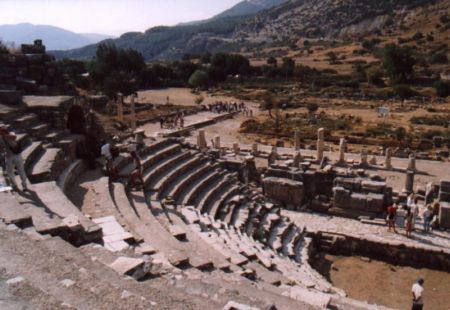


Istanbul, TurquieDimanche 19, Juillet |
|
Un article de Wikipédia à propos Istanbul
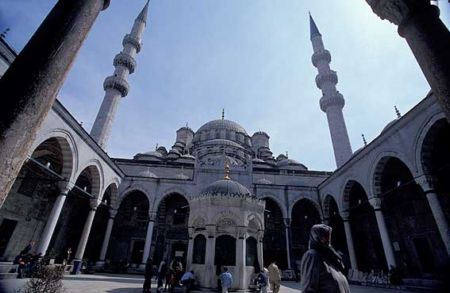
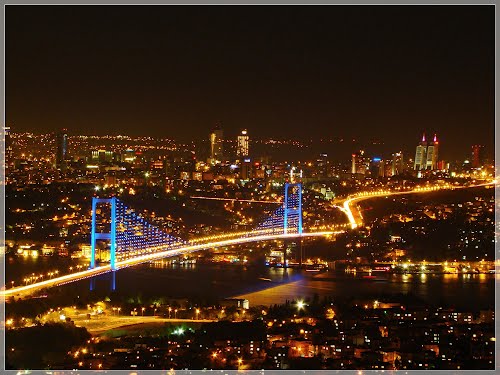
Istanbul ou Istamboul La Commission générale de terminologie et de néologie est indifférente aux deux graphies. Publié au Journal officiel de la République française le 24 septembre 2008. = (en turc İstanbul Voir article I avec ou sans point pour la prononciation et l'écriture.) est la métropole de la Turquie et la préfecture de la province du même nom. Elle est inscrite sur la liste du patrimoine mondial de l'Unesco depuis 1985.Située de part et d’autre du détroit du Bosphore, à cheval sur deux continents : l’Europe et l’Asie, elle est généralement considérée comme européenne parce que la ville historique est située sur la rive occidentale du détroit.
Elle est la plus grande agglomération du pays avec près de treize millions d'habitants recensés (des estimations donnent néanmoins le chiffre de seize millions) ce qui fait également l’une des plus grandes agglomérations du continent., et constitue aussi le principal pôle économique de la Turquie.
Appelée officiellement İstanbul depuis le, elle a porté d'autres noms durant son histoire (encore parfois utilisés selon les contextes) notamment : « Byzance », au moment de sa fondation ; puis « Constantinople » (à partir du en l'honneur de l'empereur romain Constantin).
Appelée aussi la « Nouvelle Rome » (d'ailleurs, comme Rome, Istanbul est fondée sur sept collines), Istanbul appartint d'abord à la Grèce antique, puis à l’Empire romain dont elle fut la seconde capitale après 395 (devenu l'Empire romain d'orient et appelé au « byzantin » par Hieronymus Wolf Une controverse oppose l'historiographie turque et l'historiographie grecque au sujet de l'identité culturelle de l'Empire byzantin : multinational et multiculturel pour la première, le grec servant seulement de langue officielle, mais entièrement hellénophone pour la seconde ; l'historiographie européenne et américaine prend des positions plus nuancées. Selon l'historiographie turque, par exemple dans İlber Ortaylı : Son İmparatorluk Osmanlı, 2006,, il y aurait eu dans l'Empire ottoman, au, une colonisation grecque à partir de l'actuelle Grèce, et une hellénisation de diverses populations chrétiennes, liées au dynamisme économique et démographique des Grecs.), ensuite à l’Empire ottoman depuis le, et enfin, juste après la chute de celui-ci le, à la République de Turquie, dont elle fut capitale jusqu'au, lorsque ce rôle fut dévolu à Ankara.
Les anciens noms de la ville, Byzance puis Constantinople, témoignent de cette longue histoire. Seules quelques autres grandes villes ont eu trois noms au cours de leur histoire. Du point de vue historique, on peut considérer qu'avec Athènes et Rome, Constantinople (Istanbul) est l'une des trois capitales antiques les plus importantes aujourd'hui.
Les habitants de la Byzance antique étaient appelés Byzantiotes et ceux de Constantinople, les Constantinopolitains ou les Politains. Par contre, aucun citoyen de l'Empire romain d'orient ne s'est jamais appelé Byzantin : ils se définissaient comme « Romains » et lorsqu'ils sont devenus sujets de l'Empire ottoman, celui-ci les a organisés dans le milliyet de Rum. Les habitants d’Istanbul sont les Stambouliotes ou les Istanbuliotes Le Petit Larousse donne les deux dénominations mais il semblerait que le terme « Stambouliote » soit le plus utilisé..
On ne dit pas « Istanbul » pour désigner le pouvoir politique ottoman, on dit, en employant des synecdoques, la « Sublime porte » ou simplement « la Porte » s'il s'agit du gouvernement ou « le Palais » s'il s'agit du sultan.