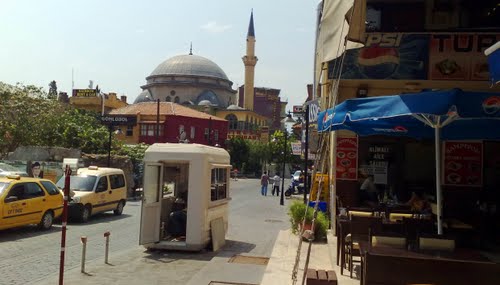
Food is extemely cheap, and good. Full meals will cost you about 5 to 10 Turkish Lira, about 3 to 7 US Dollars. Service is amazing, and only matched by its genuine friendliness. Antalya has good seafood restaurants as well. One caveat to be aware of is to make sure the quoted price is the same as the price written on the menu.
Around April, when you can perfectly get a suntan and the weather is much more bearable than summer months, is one of the best times to visit the city.
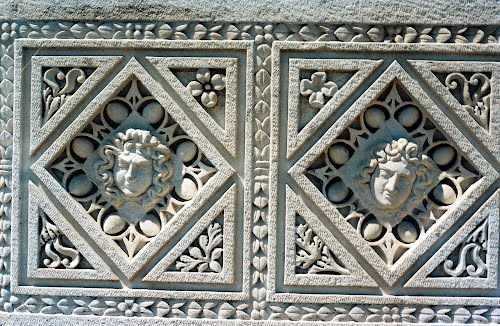
Antalya is rich in history and art.
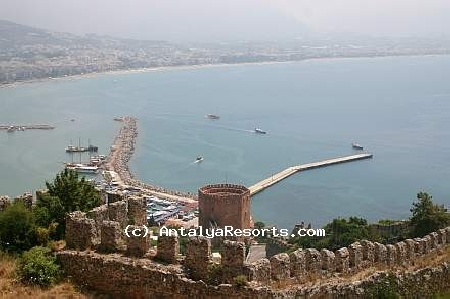
The old quarter, Kaleiçi, has narrow, winding streets enclosed in ancient city walls, which now protect the peaceful quarter from the noise of the concrete metropolis of a million people. Although there are other entrances, it is best to enter and exit the old quarter from charming Hadrianus Gate, built by the Roman emperor Hadrianus as the entrance arch to the city.
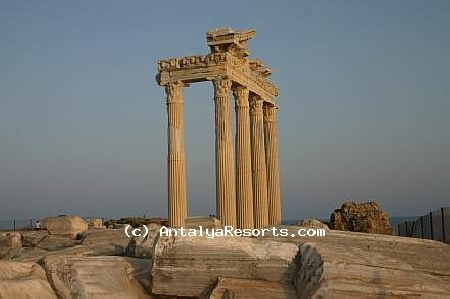
There's a great archaeology museum and plenty of historic buildings and ancient ruins nearby.
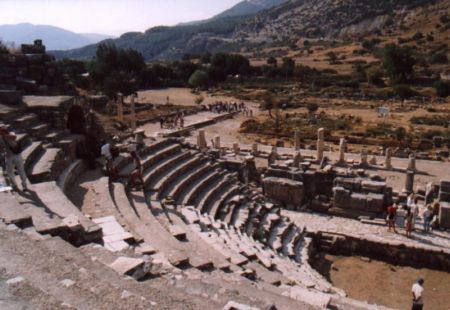
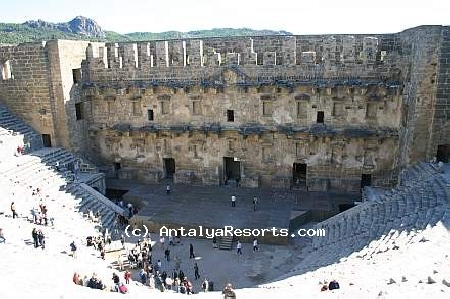
Aspendos Theater (ancient Roman theater)
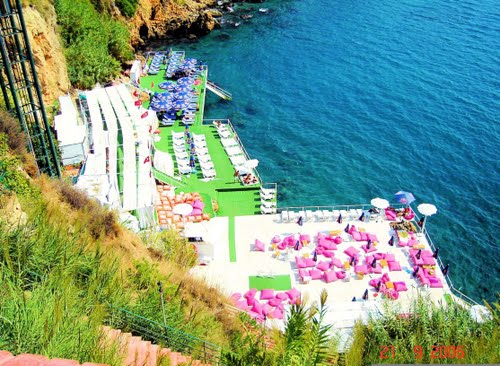
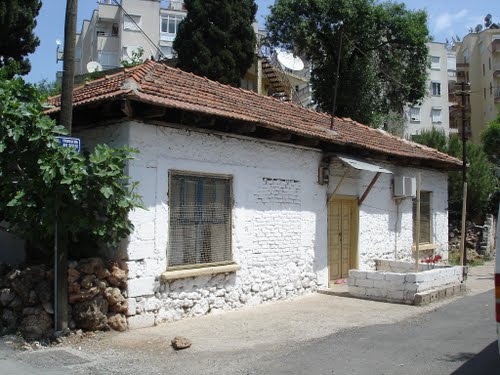
Antalya has a lively nightlife in summer. Options include bars with nargile (water pipe), games, live music and sitting around, discotheques with glamorous visitors, etc. On Konyaalti's Beach Park one club follows the next. Some of traditional houses of Kaleiçi (Old City) has been turned into bars, in which a bottle of 'Efes' beer costs between 3 TL and 5 TL, depending on the place. Their gardens shaded by trees offer a nice escape with a beer from the peak of summer heat. Raki is a traditional alcoholic beverage that tastes like licorice. Make sure you do not drink it fast otherwise you will be out quickly.
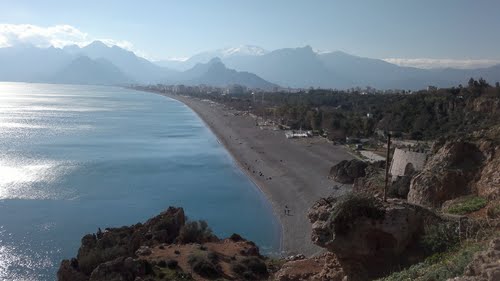
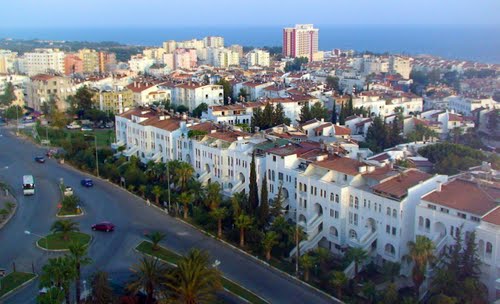
Having entered the scene in 150 BC as Attalia, named after its founder, Attalos II, king of Pergamon, Antalya has ever attracted a wide array of travellers, including Paul the Apostle, and Ibn Battuta among others. Antalya had replaced Phaselis—beautiful ruins of which now lie to south of the city, between Kemer and Olympos—as the main harbour of the surrounding region during the reign of Seljuks, in early 1200s, but the lack of a large hinterland (or, rather, lack of good connections with its mountainous hinterland) meant for much of its history eversince that it was a provincial coastal town, albeit with a multicultural community of Muslims, Christians, and Jews. As the centre of a region with beautiful beaches, verdant mountains, and a mindblowing number of ancient ruins, the tourism investments started in 1970s, which changed the fate of the city considerably.
Antalya est une grande ville touristique du Sud de la Turquie dans la préfecture de la province du même nom. Elle dispose d'un aéroport international (code AITA : AYT), l'aéroport d'Antalya.
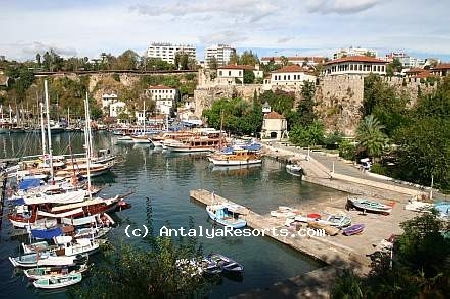
Antalya est aujourd'hui la capitale touristique de la côte méditerranéenne turque, surnommée la « Riviera turque ». La vieille ville d'Antalya, Kaleici, s'allonge au flanc d'une falaise abrupte en contrebas de laquelle se niche un ancien port, aujourd'hui port de plaisance moderne. La population d'Antalya se monte à habitants en 2008. En 2011, la population dépasse le million d'habitants.
Depuis sa fondation en 150 av. J. -C. par Attale II, roi de Pergame, qui l'appela Attaleia (Αττάλεια : Attalie), la ville a toujours été habitée. Les Romains, les Byzantins et les Seldjoukides occupèrent la ville avant qu'elle ne tombe sous la loi ottomane. Elle fut alors nommée Adalya (ou Adalia).
Antalya était connue durant le Moyen Âge en Europe sous le nom de Satalieh (ou Satalia).
Description above from the Wikipedia, licensed under CC-BY-SA full list of contributors
here.